
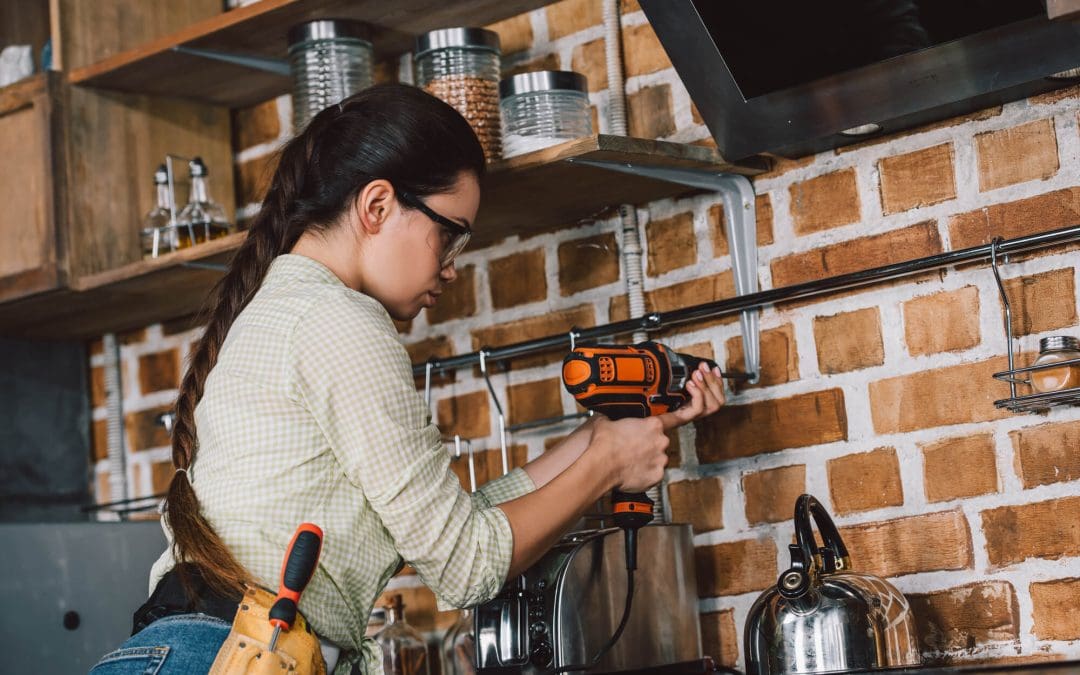
Safety precautions for DIY projects are the part of home improvement that most tutorials rush past. But the homeowners who sustain injuries aren’t the ones who lack skill; they’re the ones who skipped precautions they knew about, or didn’t know what they didn’t know. The safety precautions that prevent the most injuries are mostly simple, require no specialized equipment, and take far less time than a trip to urgent care.
The Safety Precautions for DIY Projects That Apply to Every Task
Personal protective equipment is the starting point. Safety glasses protect against debris and fragments; a task that seems low-risk can produce a projectile at exactly the wrong moment. Hearing protection matters for any tool producing sustained noise above comfortable conversation level; cumulative hearing damage is gradual, invisible, and permanent. Gloves protect against cuts and chemical exposure but should be chosen carefully; loose gloves near rotating tools create entanglement risk that bare hands don’t. An N95 or P100 respirator is appropriate for sanding, cutting composite materials, or working with adhesives and paints in enclosed spaces.
Workspace preparation is a safety precaution for DIY projects most homeowners undervalue. A cluttered workspace produces trip hazards, limits movement, and leads to improvising with the wrong tool. Clearing the work area, ensuring adequate lighting, and having a stable surface for all cutting and assembly work addresses the environmental conditions that contribute to accidents as much as any individual action. Reading the manual before operating any unfamiliar tool is almost universally skipped. Tool manuals contain safety warnings specific to that tool’s failure modes and common misuse patterns.
Tool-Specific Safety Precautions for DIY Projects
Circular saws and jigsaws are among the most commonly used and misused DIY tools. Blade guards should never be removed, they prevent the contact injuries that happen at the moment of distraction every operator eventually experiences. Securing the workpiece with clamps rather than a free hand keeps both hands away from the blade and prevents the workpiece from shifting in ways that cause kickback. Unplugging or removing the battery before changing blades or attachments is the safety precaution for DIY projects that prevents the most severe tool injuries.
Ladders are involved in more DIY fatalities than any other piece of equipment. The three-point contact rule, two hands and one foot, or two feet and one hand, on the ladder at all times, maintains stability during movement. Setting the ladder at the correct angle, base one foot out for every four feet of height, and on firm, level ground prevents the base movement that produces sudden falls. Never standing on the top two rungs or overreaching past the ladder’s sides are the specific behaviors that ladder accident data consistently identifies.
Chemical and Electrical Safety
Chemical safety begins with reading every product label before use and understanding the ventilation requirements and skin and eye contact precautions. Many common DIY products produce vapors that accumulate in enclosed spaces; adhesives, solvents, spray paints, and stains all qualify. Working outdoors or with mechanical ventilation is the chemical safety precaution for DIY projects that most consistently prevents exposure. Electrical safety centers on one non-negotiable practice: verifying a circuit is de-energized with a non-contact voltage tester before touching any wire or connection. Working on live circuits is dangerous regardless of experience level, and verification is the precaution that prevents the electrical contacts that cause cardiac events and burns.
Frequently Asked Questions (FAQs)
What personal protective equipment do I actually need for typical DIY projects?
Safety glasses are non-negotiable for any task involving cutting, drilling, sanding, or driving fasteners. Hearing protection for sustained power tool use, an N95 or better respirator for dust and chemical vapor, and work gloves appropriate for the task cover the majority of needs.
How do I safely dispose of chemical products left over from DIY projects?
Most home improvement chemicals cannot go in household trash or drains. Most municipalities operate hazardous waste collection programs that accept these at no cost. Latex paint that has fully dried is accepted in household trash in most jurisdictions; oil-based paint is not.
What are the most common causes of DIY project injuries and how are they prevented?
Falls from ladders account for the largest share of serious injuries. Cuts from power tools are the most common category. Eye injuries from debris, back injuries from improper lifting, and chemical exposure from inadequate ventilation round out the most frequently seen categories.
How do I know if a DIY project requires a permit and does that affect safety?
Permits are required for work affecting the structure, electrical system, plumbing, or HVAC systems where errors create ongoing safety risk. The permit process requires inspection by a code official verifying the work meets code. Checking with the local building department before starting takes five minutes. Unpermitted work creates liability issues at resale and may reflect installations never verified as safe.
What should I do if I injure myself during a DIY project?
For minor cuts, standard first aid is sufficient. For eye injuries, flush with water for at least fifteen minutes and seek medical evaluation. Chemical injuries often feel mild initially and worsen over hours. For any injury involving power tool contact, significant blood loss, or electrical contact, seek emergency evaluation immediately. Electrical contact can produce cardiac effects delayed by hours.
Golden Rule Home Inspections offers professional home inspection services in Lee, Collier, and Charlotte Counties. Contact us to schedule an appointment.