
Most homeowners who feel like they don’t have enough storage actually have more than they think. Understanding where untapped storage opportunity exists in a typical home, and which storage solutions produce the most functional improvement, is the starting point for any homeowner who wants more space without moving into a larger one.
Storage Solutions That Use the Space You Already Have
The most consistently underused space in any room is height. Most storage in a typical home is concentrated at counter height, shelf height, or floor level, while the wall space above those zones sits empty. Vertical storage solutions that extend from the floor toward the ceiling multiply the usable storage area of any wall without consuming additional floor space. In the kitchen, upper cabinets that stop a foot below the ceiling leave space that collects dust and visual clutter. Extending cabinets to the ceiling and using the uppermost section for infrequently accessed items recaptures that space without making daily-use items harder to access. In living areas, floor-to-ceiling bookshelves or built-in cabinetry around a fireplace create storage solutions that also define the room architecturally and make it feel more designed rather than furnished by default.
Under-Utilized Zones Throughout the Home
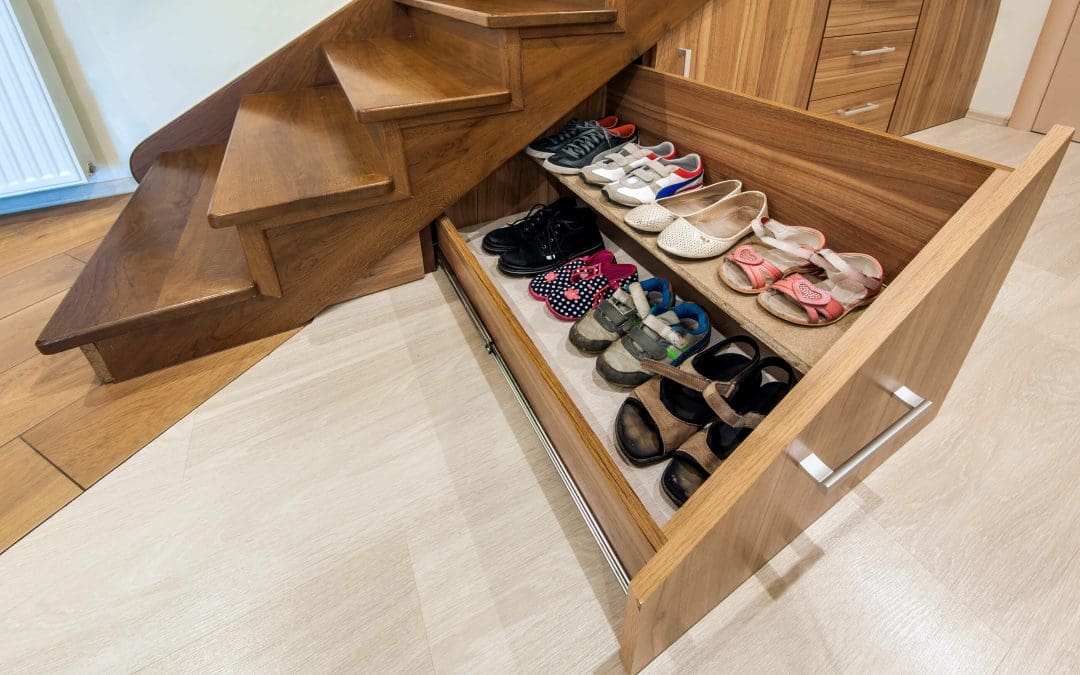
Every home has zones that are present but ignored: the space under the stairs, the area under every bed, the dead space in deep closet corners, and the wall space in hallways that passes by unused. The storage solutions that produce the most dramatic improvement for the least investment are almost always the ones that activate these ignored zones. Under-stair storage is the most dramatic opportunity; the triangular volume beneath a staircase is often left entirely open or closed off and forgotten. Converting it into built-in drawers, a small closet, or open shelving creates storage out of space that was already there. Under-bed storage addresses the largest unused space in the bedroom without adding any furniture. Deep closet corners that standard hanging rods leave inaccessible are transformed by rotating carousels or corner shelf systems that bring previously unreachable space into daily use.
The Storage Solutions That Work in Every Room
Some storage solutions are versatile enough to work anywhere, and the ones that consistently produce the most improvement are those that combine multiple functions rather than serving only one. Ottoman storage is the living room solution that earns its footprint most completely. A bench at the foot of the bed or in the entry that opens for storage does the same in the bedroom and entry zone. Floating shelves in bathrooms, home offices, and hallways provide storage without the visual weight of freestanding furniture and can be installed at any height to suit the items they’ll hold. Pegboards have become a versatile wall storage system for kitchens, craft rooms, and mudrooms because they’re infinitely configurable and entirely adaptable as needs change. The storage solutions that hold up over time are the ones designed around how the household actually operates rather than how storage looks in a catalog. A system that is slightly less polished but deeply matched to the real patterns of the people using it outperforms a beautiful system that doesn’t fit the way things actually get put away every day.
Frequently Asked Questions (FAQs)
Where should I start when looking for storage solutions in my home?
Start by identifying the specific friction points: the areas where things consistently pile up, where you can never find what you’re looking for, or where clutter accumulates because there’s no defined place for items to go. Those friction points identify where storage will produce the most immediate improvement. Solving one specific problem completely produces more lasting improvement than attempting to organize the whole home simultaneously.
Are built-in storage solutions worth the investment compared to freestanding furniture?
Built-in storage solutions produce more capacity per square foot than freestanding furniture, contribute to the home’s resale value in a way that furniture doesn’t, and create a more finished aesthetic that elevates the room’s overall appearance. The upfront cost is higher, but the long-term return in function, aesthetics, and resale contribution makes built-ins a worthwhile investment in rooms where storage needs are significant and permanent. Freestanding solutions are more appropriate where flexibility is valued or where needs may change over time.
What storage solutions work best in small spaces?
Vertical storage is most effective in small spaces because they use height rather than floor space. Multi-function furniture that serves two or three purposes simultaneously is the other primary strategy: a bed with storage drawers, a dining table that folds, or a sofa with a pull-out compartment. The small space storage principle that matters most is that every piece of furniture should earn its space by doing more than one thing.
How do I create storage without making a room feel cluttered?
The most effective storage in a living space is concealed rather than open. Where open shelving is used, limiting the display to a curated selection rather than using every available inch prevents the visual clutter open storage could create.
Can storage solutions actually increase home resale value?
Yes, particularly built-in storage integrated into the home’s architecture. Built-in closet systems, kitchen pantry organization, mudroom lockers, and garage storage systems are consistently identified by buyers as desirable features that reduce the perception of move-in work required.
Golden Rule Home Inspections offers professional home inspection services in Lee, Collier, and Charlotte Counties. Contact us to schedule an appointment.