
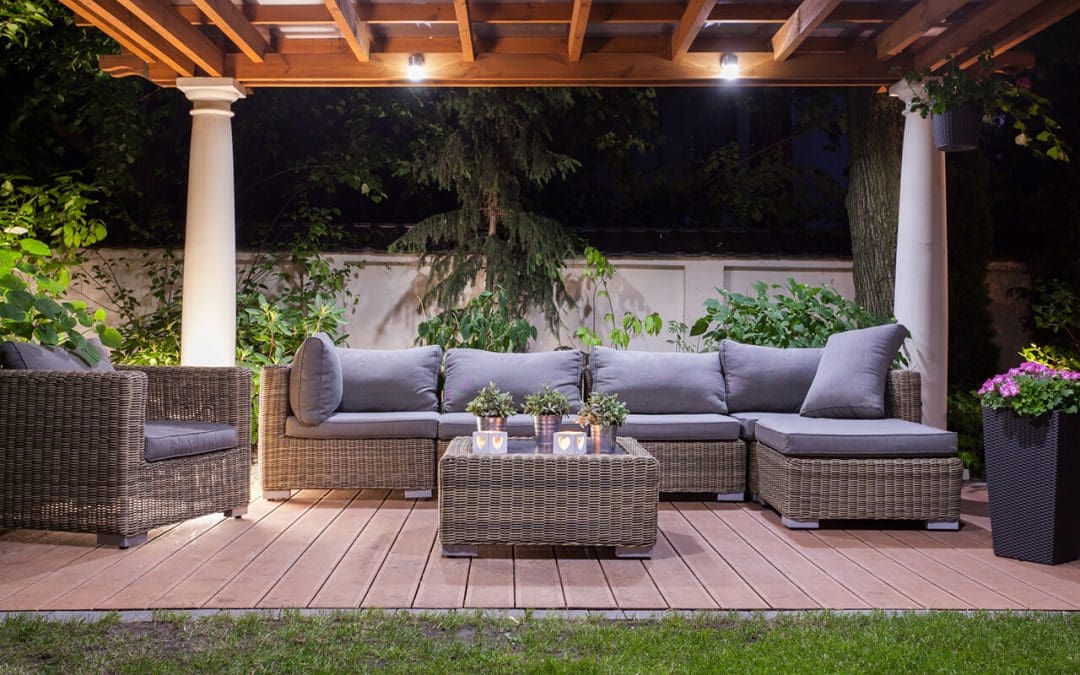
In Southwest Florida, winter is when the outdoors finally cooperates, and a well-planned outdoor living space can become the most-used room in the house. Too often, though, a lanai or patio ends up as a table and a few chairs pushed against the wall. A little planning around layout, comfort, and atmosphere is what separates a space that looks fine from one that people genuinely want to sit in. Here’s how to build one, whether you’re starting from scratch or refreshing what you already have.
How to Plan an Outdoor Living Space Around Real Life
The best spaces are designed around a purpose, not a furniture set. Decide whether the area is mainly for dining, lounging, cooking, or entertaining, then size and arrange everything around that choice. A dining table needs about three feet of clearance behind each chair, while a conversation area works best when seating is close enough that people can talk without raising their voices. If the space has to do more than one job, divide it into zones with a rug, a planter, or the placement of the furniture itself so each area has a clear identity. Leave a clear walking path of at least three feet so nobody has to squeeze past a chair to reach the door, and think about where people will naturally gather when the group is larger than usual.
Build in Shade, Seating, and Airflow
Comfort decides whether people stay outside past the first ten minutes. In Florida, that starts with shade. A pergola, retractable awning, or large market umbrella makes midday seating workable, and ceiling fans on a lanai keep air moving, which helps with both humidity and bugs. Choose cushions and fabrics rated for outdoor use, since solution-dyed acrylic resists fading and mildew far better than standard upholstery. A shade sail is a budget-friendly alternative if a permanent structure isn’t practical. Deep, supportive seating is worth the extra cost, because uncomfortable chairs turn even a beautiful setup into decoration.
Lighting and Plants That Make an Outdoor Living Space Feel Finished
Lighting extends the hours you can use the space. Layer a few sources instead of relying on one bright fixture: string lights overhead, lanterns or low path lights for definition, and a candle or solar accent on the table. Warm white bulbs flatter both people and plants, and putting string lights on a dimmer lets the mood shift easily from dinner to a quiet evening. For greenery, potted palms, orchids, and herbs like basil and rosemary do well in Southwest Florida and add color, texture, and a bit of privacy. Grouping pots in odd numbers at different heights looks intentional, and a tall planter in a corner softens a blank wall.
Add the Small Touches That Make It Easy to Enjoy
Small conveniences keep a space in regular use. A side table within reach of every seat, a storage bench or weatherproof cabinet for cushions, and an outdoor rug that anchors the seating area all make daily use easier. Outdoor speakers, a fire table, or a simple drink cart add personality without a major project. A thoughtful outdoor living space also stays flexible, so it’s easy to rearrange for guests and easy to refresh each season. A few personal touches, such as outdoor-rated throw pillows, a favorite lantern collection, or art made for outdoor use, make the space feel like an extension of the home rather than just a patio.
Frequently Asked Questions (FAQs)
How much room do I need for an outdoor living space?
A dining area for four to six people needs roughly a ten-by-ten-foot footprint plus walking clearance. A lounge setup with a sofa, two chairs, and a coffee table needs about the same. Smaller patios can still work well with a bistro set or a pair of chairs and a side table.
What outdoor furniture holds up best in Florida?
Powder-coated aluminum, teak, and quality resin wicker handle heat, humidity, and sun well. Look for cushions covered in solution-dyed acrylic or similar outdoor fabric. Homes near the coast should favor materials that resist salt air, and covering or storing cushions during heavy rain will extend their life considerably.
How do I keep bugs away from the space?
Ceiling fans or a standing fan make it harder for mosquitoes to settle, and a screened lanai helps even more. Emptying standing water from planters and saucers removes breeding spots, and plants like lemongrass add a mild natural deterrent.
Do I need a permit for a pergola or outdoor kitchen?
It often depends on the county and any HOA rules. Before building anything permanent, check with the local building department and your HOA so you know what approvals are needed ahead of time.
How can I add privacy without a big project?
Tall potted plants, outdoor curtains, lattice panels, and bamboo screens are all affordable ways to create privacy. They also add texture and make the space feel more enclosed and comfortable, which encourages people to stay outside longer.
Golden Rule Home Inspections offers professional home inspection services in Lee, Collier, and Charlotte Counties. Contact us to schedule an appointment.